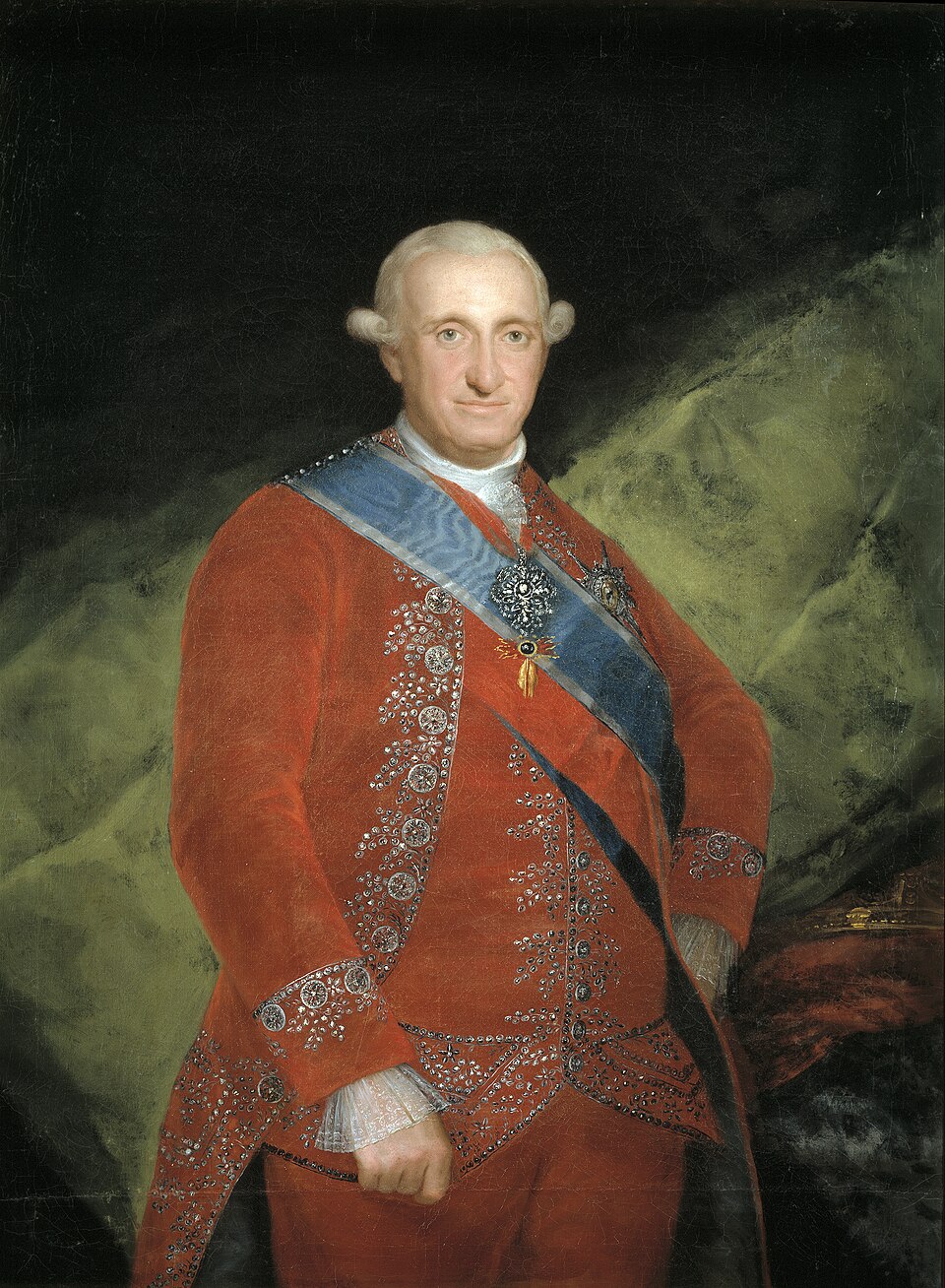
Carlos IV of Spain issued his Black Code, the Codigo Negro Carolino (Black Code of Carlos IV) in 1789. The intent was to gather regulations involving slaves into a single code that could be implemented in all Spanish colonies. When it came to Louisiana, at that time a Spanish colony, plantation owners rejected it because they saw it as too humane to slaves. Governor de Carondelet issued his own version,
“A Decree for Louisiana Issued by the Baron of Carondelet, June 1, 1795.”
It lifted many of the restrictions that Carlos IV had placed on slave owners.
— Bruce R. Magee
.svg)
.svg)



Índice de contenidos
- El Rey.
- CAPÍTULO I.
- Educacion.
- CAPÍTULO II.
- De los alimentos y vestuario.
- CAPÍTULO III.
- Ocupacion de los Esclavos.
- CAPÍTULO IV.
- Diversiones.
- CAPÍTULO V.
- De las habitaciones y enfermería.
- CAPÍTULO VI.
- De los viejos y enfermos habituales.
- CAPÍTULO VII.
- Matrimonio de Esclavos.
- CAPÍTULO VIII.
- Obligaciones de los Esclavos, y penas correccionales.
- CAPÍTULO IX.
- De la imposicion de penas mayores.
- CAPÍTULO X.
- Defectos, ó excesos de los Dueños, ó Mayordomos.
- CAPÍTULO XI.
- De los que injurian á los Esclavos.
- CAPÍTULO XII.
- Lista de Esclavos.
- CAPÍTULO XIII.
- Modo de averiguar los excesos de los Dueños o Mayordomos.
- CAPÍTULO XIV.
- Caxa de multas.

En el Código de las Leyes de Partida, y demas Cuerpos de la Legislacion de estos Reynos, en el de la Recopilacion de Indias, Cédalas generales y particulares comunicadas á mis Dominios de América desde su descubrimiento, y en las Ordenanzas, que examinadas por mi Consejo de las Indias, han merecido mi Real aprobacion, se halla establecido, observado y seguido constantemente el sistema de hacer útiles á los Esclavos, y proveido lo conveniente á su educacion, trato, y á la ocupacion que deben darles sus Dueños, conforme á los principios y reglas, que dictan la Religion, la humanidad y el bien del Estado, compatibles con la esclavitud y tranquilidad pública: sin embargo, como no sea facil á todos mis Vasallos de América, que poseen Esclavos, instruirse suficientemente en todas las disposiciones de las Leyes insertas en dichas colecciones, y mucho menos en las Cédulas generales y particulares, y Ordenanzas municipales aprobadas para diversas Provincias; teniendo presente que por esta causa, no obstante lo mandado por mis Augustos Predecesores sobre la educacion, trato y ocupacion de los Esclavos, se han introducido por sus Dueños y Mayordomos algunos abusos poco conformes, y aun opuestos al sistema de la Legislacion, y demas providencias generales y particulares tomadas en el asunto. Con el fin de remediar semejantes desórdenes, y teniendo en consideracion, que con la libertad, que para el comercio de Negros he concedido á mis Vasallos por el artículo primero de la Real Cédula de veinte y ocho de Febrero próximo pasado, se aumentará considerablemente el número de Esclavos en ambas Américas, mereciéndome la debida atencion esta clase de individuos del género humano, en el ínterin que en el Código general, que se está formando para los Dominios de Indias, se establecen y promulgan las Leyes correspondientes á este importante objeto: He resuelto que por ahora se observe puntualmente por todos los Dueños y Poseedores de Esclavos de aquellos Dominios la Instruccion siguiente.
In the Code of the Laws of Partida, and other bodies of legislation of these kingdoms, in that of the Compilation of the Indies, general and specific decrees communicated to my dominions of America since their discovery, and in the ordinances which, having been examined by my Council of the Indies, have merited my royal approval, there is found established, observed, and constantly followed the system of making slaves useful, and providing what is necessary for their education, treatment, and the occupation that their owners must give them, in accordance with the principles and rules dictated by religion, humanity, and the welfare of the State, compatible with slavery and public tranquility: nevertheless, as it is not easy for all my vassals in America who own slaves to become sufficiently instructed in all the provisions of the laws inserted in said collections, and much less in the general and specific decrees, and municipal ordinances approved for various provinces; bearing in mind that for this reason, notwithstanding what was commanded by my august predecessors regarding the education, treatment, and occupation of slaves, some abuses have been introduced by their owners and overseers that are little in keeping with, and even contrary to, the system of legislation and other general and specific measures taken on the matter. With the purpose of remedying such disorders, and taking into consideration that with the freedom for the trade of Negroes that I granted to my vassals by the first article of the Royal Decree of the twenty-eighth of February last past, the number of slaves will increase considerably in both Americas, this class of individuals of the human race deserving my proper attention, in the interim while the general Code being prepared for the dominions of the Indies establishes and promulgates the laws corresponding to this important object: I have resolved that for now the following Instruction shall be punctually observed by all owners and possessors of slaves in those dominions.

CAPÍTULO PRIMERO.
Educacion.
Todo Poseedor de Esclavos, de qualquier clase y condicion que sea, deberá instruirlos en los principios de la Religion Católica, y en las verdades necesarias para que puedan ser bautizados dentro del año de su residencia en mis Dominios, cuidando que se les explique la Doctrina Christiana todos los dias de fiesta de precepto, en que no se les obligará, ni permitirá trabajar para sí, ni para sus Dueños, excepto en los tiempos de la recoleccion de frutos, en que se acostumbra conceder licencia para trabajar en los dias festivos. En estos y en los demas en que obliga el precepto de oir Misa, deberán los Dueños de Haciendas costear Sacerdote, que en unos y en otros les diga Misa, y en los primeros les explique la Doctrina Christiana, y administre los Santos Sacramentos, asi en tiempo del cumplimiento de Iglesia, como en los demas que los pidan, o necesiten; cuidando asimismo de que todos los dias de la semana, despues de concluido el trabajo, recen el Rosario á su presencia, ó la de su Mayordomo, con la mayor compostura y devocion.
Every possessor of slaves, of whatever class and condition they may be, shall instruct them in the principles of the Catholic religion, and in the truths necessary for them to be baptized within the year of their residence in my dominions, taking care that the Christian Doctrine is explained to them on all holy days of obligation, on which they shall not be compelled nor permitted to work for themselves nor for their owners, except during harvest times, when it is customary to grant permission to work on holy days. On these days, and on others when the precept to hear Mass is obligatory, the owners of plantations shall pay for a priest to say Mass for them on both, and on the former to explain the Christian Doctrine to them and administer the Holy Sacraments, both at the time of their annual church obligation and at any other times they may request or need it; likewise taking care that every day of the week, after work is concluded, they say the Rosary in their presence, or that of their overseer, with the greatest composure and devotion.
CAPÍTULO II.
De los alimentos y vestuario.
Siendo constante la obligacion en que se constituyen los Dueños de Esclavos de alimentarlos y vestirlos, y á sus mugeres, é hijos, ya sean estos de la misma condicion, o ya libres, hasta que puedan ganar por si con que mantenerse, que se presume poderlo hacer en llegando á la edad de doce años en las mugeres, y catorce en los varones; y no pudiéndose dar regla fixa sobre la quantidad y qualidad de los alimentos, y clase de ropas, que les deben suministrar, por la diversidad de Provincias, climas, temperamentos y otras causas particulares; se previene, que, en quanto á estos puntos, las Justicias del distrito de las Haciendas, con acuerdo del Ayuntamiento, y audiencia del Procurador Síndico, en calidad de Protector de los Esclavos, señalen y determinen la quantidad y qualidad de alimentos y vestuario, que proporcionalmente, segun sus edades y sexôs, deban suministrarse á los Esclavos por sus Dueños diariamente, conforme á la costumbre del Pais, y á los que comunmente se dan á los Jornaleros, y ropas de que usan los Trabajadores libres, cuyo reglamento, despues de aprobado por la Audiencia del distrito, se fixará mensualmente en las puertas del Ayuntamiento y de las Iglesias de cada Pueblo, y en las de los Oratorios, ó Ermitas de las Haciendas, para que llegue á noticia de todos, y nadie pueda alegar ignorancia.
The obligation of slave owners to feed and clothe them, as well as their wives and children — whether the latter are of the same condition or free — being constant until they can earn their own livelihood, which is presumed possible upon reaching the age of twelve for women and fourteen for men; and as it is impossible to give a fixed rule regarding the quantity and quality of food and the type of clothing that must be supplied to them due to the diversity of provinces, climates, temperaments, and other specific causes; it is provided that, regarding these matters, the justices of the plantation districts, with the agreement of the Ayuntamiento [council] and a hearing with the Procurador Síndico [city attorney] in his capacity as Protector of Slaves, shall designate and determine the quantity and quality of food and clothing that, proportionally according to their ages and sexes, must be supplied daily to the slaves by their owners, in accordance with the custom of the country and that which is commonly given to day laborers, and the clothes worn by free workers, which regulation, after being approved by the Audiencia [court] of the district, shall be posted monthly on the doors of the Ayuntamiento and the churches of each town, and on those of the chapels or shrines of the plantations, so that it becomes known to all, and no one may plead ignorance.
CAPÍTULO III.
Ocupacion de los Esclavos.
La primera y principal ocupacion de los Esclavos debe ser la Agricultura y demas labors del campo, y no los oficios de vida sedentaria; y así para que los Dueños y el Estado consigan la debida utilidad de sus trabajos, y aquellos los desempeñen como corresponde, las Justicias de las Ciudades y Villas, en la misma forma que en el capítulo antecedente, arreglarán las tareas del trabajo diario de los Esclavos proporcionadas á sus edades, fuerzas y robustez: de forma, que debiendo principiar y concluir el trabajo de sol á sol, les queden en este mismo tiempo dos horas en el dia para que las empleen en manufacturas, ú ocupaciones, que cedan en su personal beneficio y utilidad; sin que puedan los Dueños, ó Mayordomos obligar á trabajar por tareas á los mayores de sesenta años, ni menores de diez y siete, como tampoco á las Esclavas, ni emplear á estas en trabajos no conformes con su sexo, ó en los que tengan que mezclarse con los varones, ni destinar á aquellas á jornaleras; y por los que apliquen al servicio doméstico, contribuirán con los dos pesos anuales, prevenidos en el capítulo octavo de la Real Cédula de veinte y ocho de Febrero ultimo, que queda citada.
The first and principal occupation of slaves must be agriculture and other field labors, and not occupations of a sedentary life; and thus, so that owners and the State may obtain the proper utility from their labor, and that the former may carry it out as is fitting, the justices of the cities and towns, in the same manner as in the preceding chapter, shall regulate the tasks of daily slave labor in proportion to their ages, strength, and robustness: in such a way that — while labor must begin and end from sun to sun — they shall have two hours during the day within this same time to employ in manufactures or occupations that yield to their personal benefit and utility; it being forbidden for owners or overseers to compel those over sixty years of age or under seventeen to work by tasks, as well as female slaves, nor may they employ the latter in labors not conforming to their sex, or in those where they must mix with men, nor destine them as day laborers; and for those applied to domestic service, they shall contribute the two annual pesos provided for in the eighth chapter of the Royal Decree of the twenty-eighth of February last, which has been cited.
CAPÍTULO IV.
Diversiones.
En los dias de fiesta de precepto, en que los Dueños no pueden obligar, ni permitir que trabajen los Esclavos, despues que estos hayan oido Misa, y asistido á la explicacion de la Doctrina Christiana, procurarán los Amos, y en su defecto los Mayordomos, que los Esclavos de sus Haciendas, sin que se junten con los de las otras, and con separacion de los dos sexôs, se ocupen en diversiones simples y sencillas, que deberán presenciar los mismos Dueños, o Mayordomos, evitando que se excedan en beber, y haciendo que estas diversiones se concluyan antes del toque de Oraciones.
On holy days of obligation, on which owners can neither compel nor permit slaves to work, after the slaves have heard Mass and attended the explanation of the Christian Doctrine, the masters, and in their absence the overseers, shall see that the slaves of their estates, without mingling with those of others and with separation of the two sexes, occupy themselves in simple and innocent amusements, which the owners or overseers themselves must attend, preventing them from overindulging in drink, and ensuring that these amusements are concluded before the evening bell for prayers.
CAPÍTULO V.
De las habitaciones y enfermería.
Todos los Dueños de Esclavos deberán darles habitaciones distintas para los dos sexôs, no siendo casados, and que sean cómodas y suficientes para que se liberten de las intemperies, con camas en alto, mantas, ó ropa necesaria, y con separacion para cada uno, y cuando mas dos en un quarto, y destinarán otra pieza, ó habitacion separada, abrigada y comoda para los enfermos, que deberán ser asistidos de todo lo necesario por sus Dueños; y en caso que estos, por no haber proporcion en las Haciendas, ó por estar estas inmediatas á las Poblaciones, quieran pasarlos al Hospital, deberá contribuir el Dueño para su asistencia con la quota diaria que señale la Justicia, en el modo y forma prevenido en el capitulo segundo; siendo asimismo de obligacion del Dueño costear el entierro del que falleciere.
All owners of slaves must provide them with separate rooms for the two sexes, if they are not married, and these must be comfortable and sufficient to shield them from the inclemencies of the weather, with raised beds, blankets, or necessary bedding, and with separation for each one, and at most two to a room; and they shall designate another room or separate dwelling, warm and comfortable, for the sick, who must be assisted with everything necessary by their owners; and in the event that the owners, due to a lack of accommodations on the plantations or because these are close to the towns, wish to transfer them to the hospital, the owner must contribute toward their care the daily quota designated by the justice, in the manner and form provided in the second chapter; it being likewise the obligation of the owner to pay for the burial of anyone who passes away.
CAPÍTULO VI.
De los viejos y enfermos habituales.
Los Esclavos que por su mucha edad, ó por enfermedad, no se hallen en estado de trabajar, y lo mismo los niños y menores de qualquiera de los dos sexôs, deberán ser alimentados por los Dueños, sin que estos puedan concederles la libertad por descargarse de ellos, á no ser proveyéndoles del peculio suficiente á satisfaccion de la Justicia, con audiencia del Procurador Síndico, para que puedan mantenerse sin necesidad de otro auxilîo.
Slaves who, due to their advanced age or illness, do not find themselves in a condition to work, and likewise children and minors of either sex, must be fed by their owners, without the latter being permitted to grant them freedom in order to rid themselves of them, unless they provide them with a sufficient inheritance or allowance to the satisfaction of the justice, following a hearing with the Procurador Síndico, so that they may maintain themselves without need of other assistance.
CAPÍTULO VII.
Matrimonio de Esclavos.
Los Dueños de Esclavos deberán evitar los tratos ilícitos de los dos sexôs, fomentando los matrimonios, sin impedir el que se casen con los de otros Dueños; en cuyo caso, si las Haciendas estuviesen distantes, de modo que no puedan cumplir los consortes con el fin del matrimonio, seguirá la muger al marido, comprándola el Dueño de este á justa tasacion de peritos nombrados por las partes, y por el tercero, que en caso de discordia nombrará la Justicia; y el Dueño del marido no se conviene en la compra, tendrá la misma accion el que lo fuere de la muger.
Owners of slaves must prevent illicit relations between the two sexes, encouraging marriages, without impeding them from marrying the slaves of other owners; in which case, if the plantations are distant, so that the spouses cannot fulfill the purpose of marriage, the wife shall follow the husband, with the owner of the latter purchasing her at a fair valuation by experts appointed by the parties, and by a third party, who shall be appointed by the justice in case of disagreement; and if the owner of the husband does not agree to the purchase, the owner of the wife shall have the same right of action.
CAPÍTULO VIII.
Obligaciones de los Esclavos, y penas correccionales.
Debiendo los Dueños de Esclavos sustentarlos, educarlos y emplearlos en los trabajos útiles y proporcionados á sus fuerzas, edades y sexôs, sin desamparar á los menores, viejos, ó enfermos, se sigue tambien la obligacion en que por lo mismo se hallan constituidos los Esclavos de obedecer y respetar á sus Dueños y Mayordomos, desempeñan las tareas y trabajos que se les señalen conforme á sus fuerzas, y venerarlos como á Padres de familia, y así el que faltare á alguna de estas obligaciones, podrá y deberá ser castigado correccionalmente por los excesos que cometa, ya por el Dueño de la Hacienda, ó ya por su Mayordomo, segun la qualidad del defecto, ó exceso, con prision, grillete, cadena, maza, o zepo, con que no sea poniéndolo en este de cabeza, ó con azotes, que no puedan pasar de veinte y cinco, y con instrumento suave, que no les cause contusion grave, o efusion de sangre; cuyas penas correccionales no podrán imponerse á los Esclavos por otras personas que por sus Dueños, ó Mayordomos.
As slave owners must sustain, educate, and employ them in useful tasks proportioned to their strength, age, and sex, without abandoning minors, the elderly, or the sick, it likewise follows that slaves are thereby obligated to obey and respect their owners and overseers, to perform the tasks and labors assigned to them according to their strength, and to revere them as fathers of families; and thus, whoever fails in any of these obligations may and must be punished correctionally for the excesses they commit, either by the owner of the plantation or by their overseer, according to the nature of the defect or excess, with imprisonment, fetters, chains, manacles, or stocks — provided they are not placed in the latter head downward — or with lashes, which may not exceed twenty-five, using a mild instrument that does not cause severe contusion or effusion of blood; which correctional punishments may not be imposed upon slaves by any persons other than their owners or overseers.
CAPÍTULO IX.
De la imposicion de penas mayores.
Quando los Esclavos cometieren excesos, defectos, ó delitos contra sus Amos, Muger, ó Hijos, Mayordomos, u otra qualquiera persona, para cuyo castigo y escarmiento no sean suficientes las penas correccionales de que trata el capítulo antecedente, asegurado el delinquiente por el Dueño, ó Mayordomo de la Hacienda, ó por quien se halle presente á la comision del delito, deberá el injuriado, ó persona que lo represente, dar parte á la Justicia, para que con audiencia del Dueño del Esclavo, si no lo desampara antes de contestar la demanda, y no es interesado en la acusacion, y en todos casos con la del Procurador Síndico, en calidad de Protector de los Esclavos, se proceda con arreglo á lo determinado por las Leyes, á la formacion y determinacion del proceso, é imposicion de la pena correspondiente, segun la gravedad y circunstancias del delito; observándose en todo lo que las mismas Leyes disponen sobre las causas de los delinqüentes de estado libre. Y quando el Dueño no desampare al Esclavo, y sea este condenado á la satisfaccion de daños y perjuicios en favor de un tercero, deberá responder de ellos el Dueño, ademas de la pena corporal, que segun la gravedad del delito sufrirá el Esclavo delinqüente, despues de aprobada por la Audiencia del distrito, si fuere de muerte, ó mutilacion de miembro.
When slaves commit excesses, faults, or crimes against their masters, their wives or children, overseers, or any other person, for whose punishment and warning the correctional penalties treated in the preceding chapter are not sufficient, the offender having been secured by the owner or overseer of the plantation, or by whoever is present at the commission of the crime, the injured party or the person representing them must inform the justice, so that with a hearing from the owner of the slave — if he does not abandon the slave before answering the suit, and is not an interested party in the accusation — and in all cases with that of the Procurador Síndico in his capacity as Protector of Slaves, they may proceed in accordance with what is determined by the laws for the formation and determination of the trial and the imposition of the corresponding penalty, according to the gravity and circumstances of the crime; observing in everything what the same laws provide regarding the cases of offenders of free status. And when the owner does not abandon the slave, and the latter is condemned to the satisfaction of damages and injuries in favor of a third party, the owner must be liable for them, in addition to the corporal punishment which, according to the gravity of the crime, the offending slave shall suffer after being approved by the Audiencia of the district, if it should be of death or mutilation of a limb.
CAPÍTULO X.
Defectos, ó exceso de los Dueños, ó Mayordomos.
El Dueño de Esclavos, ó Mayordomo de Hacienda que no cumpla con lo prevenido en los capítulos de esta Instruccion, sobre la educacion de los Esclavos, alimentos, vestuario, moderacion de trabajos y tareas, asistencia á las diversiones honestas, señalamiento de habitaciones y enfermería, ó que desampare á los menores, viejos, ó impedidos; por la primera vez, incurrirá en la multa de cincuenta pesos, por la segunda de ciento, y polla tercera de doscientos, cuyas multas deberá satisfacer el Dueño, aun en el caso de que solo sea culpado el Mayordomo, si este no tuviese de que pagar, distribuyéndose su importe por terceras partes, Denunciador, Juez, y Caxa de multas, de que despues se tratará. Y en caso de que las multas antecedentes no produzcan el debido efecto, y se verificase reincidencia, se procederá contra el culpado á la imposicion de otras penas mayores, como inobedientes á mis Reales órdenes, y se me dará cuenta con justificacion para que tome la condigna providencia.
Quando los defectos de los Dueños, ó Mayordomos fuesen por exceso en las penas correccionales, causando á los Esclavos contusion grave, efusion de sangre, ó mutilacion de miembro, además de sufrir las mismas multas pecuniarias citadas, se procederá contra el Dueño, ó Mayordomo criminalmente á instancia del Procurador Síndico, substanciando la causa conforme á derecho, y se le impondrá la pena correspondiente al delito cometido, como si fuese libre el injuriado, confiscándose ademas el Esclavo para que se venda á otro Dueño, si quedare hábil para trabajar, aplicando su importe á la Caxa de multas; y quando el Esclavo quedase inhábil para ser vendido, sin volvérselo al Dueño, ni Mayordomo que se excedió en el castigo, deberá contribuir el primero con la quota diaria que se señalase por la Justicia para su manutencion y vestuario por todo el tiempo de la vida del Esclavo, pagándola por tercios adelantados.
Any owner of slaves or plantation overseer who fails to comply with the provisions contained in the chapters of this Instruction regarding the education of slaves, food, clothing, moderation of labor and tasks, attendance at proper amusements, assignment of housing and infirmaries, or who abandons minors, the elderly, or the disabled, shall, for the first offense, incur a fine of fifty pesos; for the second, one hundred; and for the third, two hundred; which fines must be paid by the owner, even in the event that only the overseer is at fault, if the latter has no means to pay, with the amount being distributed in three equal parts among the informant, the judge, and the fines fund, which will be discussed later. And in the event that the preceding fines do not produce the desired effect, and a repeat offense occurs, other greater penalties shall be imposed upon the guilty party as individuals disobedient to my royal orders, and an account with supporting evidence shall be given to me so that I may take the appropriate measures.
When the faults of owners or overseers arise from excess in correctional punishments, causing severe contusion, effusion of blood, or mutilation of a limb to the slaves, in addition to suffering the aforementioned pecuniary fines, criminal proceedings shall be initiated against the owner or overseer at the instance of the Procurador Síndico, substantiating the case according to law, and the corresponding penalty for the crime committed shall be imposed as if the injured person were free, the slave furthermore being confiscated to be sold to another owner, if he remains fit to work, with the proceeds applied to the fines fund; and when the slave is rendered unfit to be sold, without being returned to the owner or overseer who exceeded in the punishment, the former must contribute the daily quota designated by the justice for his maintenance and clothing for the duration of the slave's life, paying it in advance every four months.
CAPÍTULO XI.
De los que injurian á los Esclavos.
Como solo los Dueños y Mayordomos pueden castigar correccionalmente á los Esclavos con la moderacion que queda prevenida, qualquiera otra persona que no sea su Dueño, ó Mayordomo no les podrá injuriar, castigar, herir, ni matar, sin incurrir en las penas establecidas por las Leyes para los que cometen semejantes excesos, ó delitos contra las personas de estado libre, siguiéndose, substanciándose y determinándose la causa á instancia del Dueño del Esclavo que hubiese sido injuriado, castigado, ó muerto; en su defecto, de oficio por el Procurador Síndico, en calidad de Protector de los Esclavos, que como tal Protector tendrá tambien intervencion en el primer caso, aunque haya acusador.
As only owners and overseers may correctionally punish slaves with the moderation that has been provided, any other person who is not their owner or overseer may not injure, punish, wound, or kill them without incurring the penalties established by the laws for those who commit similar excesses or crimes against persons of free status, with the case being pursued, substantiated, and determined at the instance of the owner of the slave who has been injured, punished, or killed; in their absence, it shall be done officially by the Procurador Síndico in his capacity as Protector of Slaves, who as such Protector shall also intervene in the first instance, even if there is an accuser.
CAPÍTULO XII.
Lista de Esclavos.
Los Dueños de Esclavos anualmente deberán presentar lista firmada y jurada á la Justicia de la Ciudad, ó Villa, en cuya jurisdiccion se hallen situadas sus Haciendas, de los Esclavos que tengan en ellas, con distincion de sexôs y edades, para que se tome razon por el Escribano de Ayuntamiento en un libro particular, que se formará para este fin, y que se conservará en el mismo Ayuntamiento con la lista presentada por el Dueño, y este luego que se muera, ó ausente alguno de la Hacienda, y dentro del término de tres dias, deberá dar parte á la Justicia para que con citacion del Procurador Síndico se anote en el libro, á fin de evitar toda sospecha de haberle dado muerte violenta; y quando el Dueño faltare á este requisito, será de su obligacion justificar plenamente, ó la ausencia del Esclavo, ó su muerte natural, pues de lo contrario se procederá á instancia del Procurador Síndico á formarle la causa correspondiente.
Slave owners must annually present a signed and sworn list to the justice of the city or town in whose jurisdiction their plantations are situated, of the slaves they have on them, distinguishing sexes and ages, so that it may be recorded by the town council clerk in a specific book to be created for this purpose, which shall be kept in the same town council along with the list presented by the owner; and as soon as any slave dies or is missing from the plantation, and within the term of three days, the owner must inform the justice so that, with a summons to the Procurador Síndico, it may be noted in the book, in order to avoid any suspicion of having inflicted a violent death upon him; and when the owner fails in this requirement, it shall be his obligation to provide full proof of either the absence of the slave or his natural death, for otherwise, at the instance of the Procurador Síndico, proceedings shall be initiated to form the corresponding case against him.
CAPÍTULO XIII.
Modo de averiguar los excesos de los Dueños ó Mayordomos.
Las distancias que median de las Haciendas á las Poblaciones: los inconvenientes que se seguirían de que con el pretexto de quejarse, se permitiese á los Esclavos que saliesen de aquellas sin cédula del Dueño, ó Mayordomo, con expresion del fin de su salida, y las justas disposiciones de las Leyes para que no se auxilie, proteja y oculte á los Esclavos fugitivos, precisa á facilitar los medios mas proporcionados á todas estas circunstancias, para que se puedan adquirir noticias del modo con que se les trata en las Haciendas, siendo uno de estos, que los Eclesiásticos que pasen á ellas á explicarles la Doctrina, y decirles Misa, se puedan instruir por sí, y por los mismos Esclavos del modo de proceder de los Dueños, ó Mayordomos, y de como se observa lo prevenido en esta Instruccion, para que dando noticia secreta y reservada al Procurador Síndico de la Ciudad, ó Villa respectiva, promueva el que se indague si los Amos, ó Mayordomos faltan en todo, ó en parte á sus respectivas obligations, sin que por defecto de justificacion de la noticia, ó denuncia reservada dada por el Eclesiástico por razon de su ministerio, ó por queja de los Esclavos, quede responsable aquel á cosa alguna, pues su noticia solo debe servir de fundamento para que el Procurador Sindico promueva y pida ante la Justicia que se nombre un individuo del Ayuntamiento, ú otra persona de arreglada conducta, que pase á la averiguacion, formando la competente sumaria, y entregándola á la misma Justicia, sustancie y determine la causa conforme á derecho, oyendo al Procurador Síndico, y dando cuenta en los casos prevenidos por las Leyes, y esta Instruccion, á la Audiencia del distrito, y admitiendo los recursos de apelacion en los que haya lugar de derecho.
Ademas de este medio convendrá que por las Justicias, con acuerdo del Ayuntamiento, y asistencia del Procurador Sindico, se nombre una persona, ó personas de caracter y conducta, que tres veces en el año visiten y reconozcan las Haciendas, y se informen de si se observa lo prevenido en esta Instruccion, dando parte de lo que noten, para que actuada la competente justificacion, se ponga remedio con audiencia del Procurador Síndico, declarándose tambien por accion popular la de denunciar los defectos, ó falta de cumplimiento de todos, ó cada uno de los capítulos anteriores, y en el concepto de que se reservará siempre el nombre del denunciador, y se le aplicará la parte de multa que se dexa señalada, sin responsabilidad en otro caso, que en el de justificarse notoria y plenísimamente, que la delacion, o denuncia fué calumniosa.
Y últimamente se declara tambien, que en los juicios de residencia se hará cargo á las Justicias y á los Procuradores Síndicos, en calidad de Protectores de los Esclavos, de los defectos de omision, o comision en que hayan incurrido por no haber puesto los medios necesarios para que tengan el debido efecto mis Reales intenciones, explicadas en esta Instruccion.
The distances that lie between the plantations and the towns; the inconveniences that would follow if, under the pretext of making complaints, slaves were permitted to leave them without a permit from the owner or overseer stating the purpose of their departure; and the just provisions of the laws so that fugitive slaves are not aided, protected, or concealed, make it necessary to facilitate the means most proportioned to all these circumstances in order to acquire information on how they are treated on the plantations, one of these being that the ecclesiastics who travel to them to explain doctrine and say Mass to them may inform themselves, on their own accord and through the slaves themselves, of the manner of proceeding of the owners or overseers, and of how the provisions of this Instruction are observed, so that by giving secret and confidential notice to the Procurador Síndico of the respective city or town, he may promote an inquiry into whether the masters or overseers fail in whole or in part in their respective obligations, without the ecclesiastic being held responsible for anything due to a lack of substantiation of the secret notice or report given by reason of his ministry, or due to a complaint from the slaves, since his notice must only serve as a foundation for the Procurador Síndico to promote and request before the justice that a member of the town council or another person of orderly conduct be appointed to proceed with the investigation, forming the competent summary indictment, and delivering it to the same justice, so that he may substantiate and determine the case according to law, hearing the Procurador Síndico, and giving an account in the cases provided for by the laws and this Instruction to the Audiencia of the district, and admitting resources of appeal where they may have place in law.
In addition to this means, it will be proper for the justices, with the agreement of the town council and the assistance of the Procurador Síndico, to appoint a person or persons of character and conduct to visit and inspect the plantations three times a year, and to inform themselves as to whether the provisions of this Instruction are being observed, reporting what they notice, so that once the competent justification has been enacted, a remedy may be provided with a hearing from the Procurador Síndico; it being also declared as a public action that anyone may denounce faults or a lack of compliance with all or each of the preceding chapters, and with the understanding that the name of the informant shall always be kept confidential, and the portion of the fine left designated shall be applied to him, without liability in any case other than when it is notoriously and most fully proven that the accusation or report was slanderous.
And lastly, it is also declared that in trials of residence, the justices and the Procuradores Síndicos, in their capacity as Protectors of Slaves, shall be held accountable for the faults of omission or commission in which they have incurred for not having provided the necessary means for my royal intentions, explained in this Instruction, to have their proper effect.
CAPÍTULO XIV.
Caxa de multas.
En las Ciudades y Villas, que es donde deben formarse los reglamentos citados, y cuyas Justicias y Cabildos se componen de individuos Españoles, se hará y tendrá en el Ayuntamiento una arca de tres llaves, de las que se entregarán el Alcalde de primer voto, el Regidor Decano, y el Procurador Síndico, para custodiar en ella el producto de las multas, penas y condenaciones, que se deben aplicar en toda las clases de causas que procedan de esta Instruccion, invirtiéndose precisamente su producto en los medios necesarios para su observancia en todas sus partes, no pudiéndose sacar de ella maravedises algunos para otro fin, y con libramiento firmado de los tres Claveros, con expresion del destino, é inversion, quedando responsables y obligados á reintegrar lo gastado, ó distribuido en otros fines, para en el caso de que por alguna de estas causas, ó por otras, no se aprueben las cuentas de este ramo por el Intendente de la Provincia, á quien anualmente se le deberán remitir, acompañándole testimonio del producto de las multas, y de su inversion con los documentos justificativos de cargo y data.
Para que tengan el debido y puntual cumplimiento todas las reglas prescriptas en esta Instruccion, derogo qualquiera Leyes, Cédulas, Reales Ordenes, usos y costumbres que se opongan á ellas; y mando á mi Consejo Supremo de las Indias, Virreyes, Presidentes, Audiencias, Gobernadores, Intendentes, Justicias, Ministros de mi Real Hacienda, y á qualquiera otros Tribunales á quienes corresponda, o puedan corresponder, que guarden, cumplan, hagan guardar, cumplir y executar quanto en esta mi Real Cédula se previene, que así es mi voluntad. Dada en Aranjuez á treinta y uno de Mayo de mil setecientos ochenta y nueve.
— YO EL REY. —
D. Antonio Porlier.
Es copia de su original.
Porlier.
In the cities and towns, which is where the aforementioned regulations must be formed, and whose courts and municipal councils are composed of Spanish individuals, a chest with three keys shall be made and kept in the town hall, of which one shall be delivered to the senior alderman, another to the dean magistrate, and the third to the Procurador Síndico, in order to guard therein the proceeds of the fines, penalties, and condemnations that must be applied in all classes of cases arising from this Instruction, their proceeds being invested precisely in the means necessary for its observance in all its parts, it being forbidden to draw any maravedis from it for any other purpose, and only with a warrant signed by the three key-holders, stating the destination and investment, they remaining responsible and obligated to reimburse what is spent or distributed for other ends, in the event that for any of these reasons, or others, the accounts of this branch are not approved by the Intendant of the province, to whom they must be submitted annually, accompanied by a testimony of the proceeds of the fines and their investment along with the supporting documents of debits and credits.
In order that all the rules prescribed in this Instruction may have their due and punctual fulfillment, I revoke any laws, decrees, royal orders, uses, and customs that oppose them; and I command my Supreme Council of the Indies, viceroys, presidents, Audiencias, governors, Intendants, justices, ministers of my royal treasury, and any other tribunals to whom it corresponds or may correspond, to keep, comply with, and cause to be kept, complied with, and executed everything provided for in this my royal decree, for such is my will. Given at Aranjuez on the thirty-first of May, one thousand seven hundred and eighty-nine.
— I THE KING. —
D. Antonio Porlier.
This is a copy of its original.
Porlier.
Notes
- Real Cédula.
1789 Real cédula sobre la educación, trato y ocupaciones de los esclavos en todos sus dominios de Indias, e Islas Filipinas, bajo las reglas que se expresan.
Royal decree on the education, treatment, and occupations of slaves in all his dominions of the Indies and Philippine Islands, under the rules herein expressed.
Text prepared by:
- Bruce R. Magee
Source
Carlos IV. Real cédula de Su Magestad sobre la educación, trato y ocupaciones de los esclavos en todos sus dominios de Indias e islas Filipinas, bajo las reglas que se expresan. Imprenta de la Viuda de Ibarra, 1789. Memoria Chilena, 2018, https:// www. memoriachilena. gob.cl/ archivos2/ pdfs/ MC0030685.pdf.
---. Real Cédula sobre la educación, trato y ocupaciones de los esclavos en todos sus dominios de Indias e islas Filipinas. Imprenta de la Viuda de Ibarra, 1789. Memoria Política de México, Doralicia Carmona Dávila, 2020, https:// www. memoriapoliticademexico. org/ Textos/ 1Independencia/ 1789-RC-ETO-ESC.html.
---. Royal Decree of His Majesty on the Education, Treatment, and Occupations of Slaves in All His Dominions of the Indies and Philippine Islands. (Aranjuez, May 31, 1789). Translated by Gemini AI. 2026.