The Role of Salt in Eastern North American Prehistory

Louisiana's cultural heritage dates back to approximately 10,000 B.C. when Paleo-Indian Hunters entered the region in search of the Pleistocene big game. Since that time, many other groups have settled in the area. Each of these groups has left evidence of its presence in the archaeological record. The Anthropological Study series published by the Department of Culture, Recreation and Tourism provides a readable account of various activities of these cultural groups. "The Role of Salt in Eastern North American Prehistory" is the third in the Study series.
Ian W. Brown, author of the present volume, became involved in the study of aboriginal salt mining through his participation in an archaeological program at Avery Island undertaken by the Lower Mississippi Survey, Peabody Museum, Harvard University. In the present volume, Brown investigates salt utilization throughout Eastern North America, while relying on analogies with salt mining in the Old World, to explain some of the materials found in North America. The aboriginal salt utilization activities at Avery Island is the departure point of his study.
We trust that the reader will enjoy this volume.
Kathleen Byrd
State Archaeologist

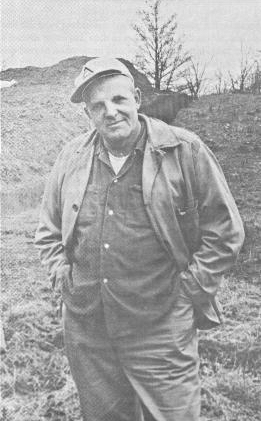
This third volume of the Anthropological Study Series of the Department of Culture, Recreation and Tourism and the Louisiana Archaeological Survey and Antiquities Commission is dedicated to the late Robert S. Neitzel. A charter member of the Commission in 1974, Neitzel served continuously as a valued and beloved member until 1980, shortly before his death. He was known to his professional colleagues as "Stu" but was better known as "Bob" to his outdoor companions around Marksville.
Neitzel was trained in anthropology at his native University of Nebraska and at the University of Chicago. He came to Louisiana in 1938, one of a group of young archaeologists assembled by Drs. Fred Kniffen and James A. Ford, of Louisiana State University, to carry on large-scale archaeological studies during WPA days. Neitzel directed the excavation of some of the Marksville mounds.
With termination of the WPA program, he established his home in Marksville, married Gwen Thomas, a local teacher, helped to design the Marksville State Park Museum and, in 1954, became its first superintendent. Intermittently, he worked in other southeastern states. In 1960 he was engaged by the Mississippi Department of Archives and History, directed the design and construction of exhibits in the state museum at Jackson, and served a term as curator. Subsequently he spent a decade of work at the Natchez Fatherland site, his best known archaeological accomplishment. He published the results of his excavations and built a model site restoration.
Additionally, Neitzel engaged in studies with Ford, Webb and Haag at the Poverty Point site and in other sites of the culture. Truly, his labors in Louisiana, in the Lower Mississippi Valley and in the entire Southeast have been of inestimable value. He was Louisiana's senior archaeologist.
Stu Neitzel's personal qualities and numerous abilities endeared him to a wide spectrum of Louisiana's citizens. We are pleased to honor him.
Clarence H. Webb, Chairman
Louisiana Archaeological Survey and Antiquities Commission
(Photograph courtesy of the Department of Geography and Anthropology, LSU)Robert S. Neitzel
(1911-1980)

When one thinks of prehistoric trade, certain exotic items immediately come to mind. Precious materials, such as gold, silver, and amber, are obvious items, and it is also easy to understand how iron, copper, and other materials became valued trade goods. But few people realize how important salt was and still is in trade throughout the world. Few of us are aware how integral salt is to our own diet, but if the salt shaker was removed from the dinner table, its absence would be noted immediately.
Salt is a biologically necessary mineral. Although estimates vary, the general consensus is that man requires between 2 and 5 grams of salt daily. Obtaining such salt for us involves little effort, as we just go to the local store, but how did prehistoric peoples who lived far from the ocean and from salt springs obtain their salt? Hunting-fishing populations received enough salt from the flesh of freshly-killed game, but if agriculture was the principal form of subsistence, salt had to come from some other means. Prehistoric peoples in the Old World realized this need, and so salt was transported, together with precious metals, along most major trade routes (Bloch 1963).
The Indians of the Eastern United States also were faced with the problem of having to distribute limited salt resources across the landscape. In this volume I will be examining the role of salt among these Indians from an archaeological perspective. Following a discussion of the historic use of salt, I will focus on the prehistoric manufacture and trade of this important substance. Prehistoric salt production was mainly performed by Mississippian peoples living between AD 900 and historic times. In a more detailed monograph on this subject, I proposed three stages of salt production (Brown I 980b). The first two stages involved the use of thick, heavy ceramic containers called salt pans. In the earliest stage the pans had fabric impressions on their exterior surface. Smooth-surfaced pans became more common in the succeeding stage. Brine was poured into these pans and evaporated using fire-heated stones, with the salt crystallizing on the surface of the vessels. By late prehistoric times, the use of salt pans was clearly on the decline. A major change in salt production appears to have occurred at this time. Instead of using heated stones, I have proposed that the third stage of salt production was characterized by placing thin, medium-sized bowls over fires. In this last method, the brine evaporated more efficiently, and without the presumed difficulty of having to create large salt pan vessels.
The last stage described above had not been recognized in the archaeological literature. Recent excavations at a saline on Avery Island, Louisiana have, however, produced material evidence in support of such a technology. Previously it had been assumed that salt production was on the decline in late prehistoric times. This "decline" may merely be a reflection of our limited knowledge, it being more probable that a change occurred in the technology of salt production in Eastern North America. The changing methods may have produced debris which left less of a trace in the ground. To obtain a better idea of what by-products might be found, I examined salt production in other parts of the world. Some interesting parallels have been observed between the material remains of European, African, and Asian salt technology, and objects occasionally found on late prehistoric sites in Eastern North America. But the parallels are not the result of transoceanic contacts. The similarities occur because different peoples, faced with the same problem of having to extract salt from solution, evolved similar salt production technologies.